Saturday, January 31, 2009

Bees need love one at a time

I think I need to just read one book at a time. I may have liked this one a lot more if I hadn't been reading a couple other books all at once. At the beginning I felt like, "Hey, I've read this book before . . . once in high school . . . disguised as Huck Finn." But I'm glad to say it didn't turn out to be the exact same. I later found out though, that she wrote that first part as it's own short story, and liked it so much she expounded, and it's a good thing she did, otherwise her little short story wouldn't have been original at all. In the after life Mark Twain would have come after her.

I really liked the circle of main characters, Lily and Rosaleen. The calendar sisters. Zach, mmm, I loved Zach. In my mind the book continues on and Zach and Lily end up married. I like that the author never changed the fact that Lily was the one who accidentally killed her mother. That is just something Lily is going to have to live with. Just like she has to cope with the fact that her mother did leave her. Which brings us into the theme of forgiveness. A well thought out theme of the novel. I liked how it was handled. I have known some people in my day who struggle with forgiveness and I definately think Lily's life warrants that struggle.

I loved all the racial tensions. I loved that it was the black people who were wise and heroic. I guess Zach's boss (I already forgot his name, Clarenec?) he was a good white guy but that's about it.

One point they made that I found very interesting is that when Lily's mother was struggling with depression the doctor recommended she go to the psych ward. The calendar sisters weren't having that. Just cause she had a serious case of depressiond didn't mean she had to go live with a bunch of crazies. And that was way back in the 50s. Hasn't changed much now. People who need special treatment for depressoin are still refered to the psych ward. I guess that's a quick cure though. Live a week with crazy/homeless/drugies and your life suddenly doesn't look so bad.

I guess I'd give the book 3.5 stars. Good contemporary work, but I don't see it sticking around forever.

Monday, January 26, 2009

Emma, the original Bella

It took me a while to get through this one, and I'm not sure why. Generally speaking, I liked it. I just kept reading so many other books while I was trying to get through this one. Austen's writing is always wonderful. But Emma herself, not so enjoyable. B-R-A-T. I've never met a "heroine" who was so selfish . . . wait, wait, Emma is the original Bella! All the boys like her and I just can't figure out why. She thinks she is better than almost all the women in the story. Which, considering the time, there was quiet a caste system. And that is one of the things that really annoys me about this book. Harriet, her sweet friend who never does anything wrong, other than heed Emma's advice, finally gets her happy ending, no thanks to Emma. And now the two of them can't be friends. Even though their husbands associate with one another through business and the two of them have spent most the novel together. But Harriet married into her social status, and Emma into hers and now they have to quit socializing together. That is so bizarre to me. I just don't understand the time period or their way of thinking.

For example, if I had lived back then I think I would have ended up married to Eric Hintze in the 6th grade. Because the first time a boy ever tells you he has feelings for you, the next thing you discuss is when you are going to get married. It's so crazy to me. You can flirt and associate publicly with any and as many boys as you desire. But once you speak one on one with a male it's over. He is inevitably going to propose to you.

I felt like Austen started the book off with too many characters. There was so much to keep track of. And I wasn't even sure why half of them were of any importance to the novel. But in the end I guess they all come together nicely and each has it's purpose. Austen is really good at making that one character you just laugh at every time they speak, cause they are so ridiculous and . . . you know someone just like them. Oh Mrs Elton.

Most likely, this one won't end up on my best 50 books ever list. Maybe it would make the 100, but not 50. I'm not opposed to having Austen on their twice, just not with this one.

Saturday, January 17, 2009

What is heaven like?

Since I've been reading Emma and The Secret Life of Bees since 2008, I didn't think the first book I'd finish in 09 would be this one. But I guess that is what happens when you borrow a book and have only a few days before you have to give it back. I'm excited to discuss it at book club, especially since it is an LDS book club. I'm impressed Kemp would write in such detail about the topic, very bold. There were definitely aspects that made me think "yup, that's what the after life is like," but Stan . . . his whole character was a little hard for me to swallow. I don't think that is what He is like. But I guess that is why it is fiction. I did enjoy the love story between Tom and April. And their boy Josh was sure a cute kid. And I liked the theme that the ultimate test is how much you love your loved ones and how willing you are to sacrifice your happiness for them. But the whole idea that I love Ben more than my soul is a bit much for me. I mean, I love him, but more than my own soul . . .? I do agree with the other theme though, that it is our responsibility to assist our family members in earning eternal glory.

Well, I'll let you know how the book club goes. Oh, and this reminded me of Life of Pi. Totally surprising ending, really gets you thinking.

Wednesday, December 31, 2008

Shelfari

I just posted this on Shelfari, thought I'd share. Top 10 reads of 2008. (Forged by Fire barely missed the cut).

After lots of thought and debate, this is the list I've come up with.

1984 – George Orwell
Tess of the D'Urbervilles – Thomas Hardy
Memoirs of a Geisha – Arthur Golden
Water for Elephants – Sara Gruen
When the Emperor was Divine – Julia Otsuka
Night – Eli Weisel
Blackboy – Richard Wright
Three Cups of Tea – Greg Mortensen and David Oliver Relin
Life of Pi – Yann Martel
The Book of Mormon

Reasoning: 1984 is my husbands favorite book so i finally broke down and read it. Usually we have differing taste, but this classic truly was mind boggling and wonderfully written.

Geisha and Tess were both beautifully romantic. The prose moved me. I loved the language and the metaphors. Both a must read for those who love a deep and real love story.

Water for Elephants . . . it's #1 in this race for a reason. Could not put it down.

The Emperor and Night were both books I'd read before, both about the woes of WWII. I could read them again and again. I love them. I really recommend When the Emperor Was Divine to anyone who wants to learn anything about the internment of Japanese Americans.

Students at my inner city school who NEVER read were really getting into Blackboy so I thought I'd see what the big deal was. The beginning really does pull you in. It is one of the best memoirs I've ever read, and I've read a lot of memoirs. My heart goes out to any African American of the time.

Three Cups of Tea is another memoir I would dub top five of all time. Mortenson is amazing. One man can change the world. Live your dreams.

And Life of Pi, I loved the beginning but the part on the boat just started to drag on and I lost interest. But boy am I glad I finished it. I've never encountered such a profound ending. It had me thinking for days. I mean, it was ALL I could think about.

Last but not least, The Book of Mormon. I read it every year, and it will always be on my list. It speaks comfort to my worried soul and eases the racing thoughts of my wandering mind. I love love love it.

And I ditto the big thanks to the admin of this group. It is so fun to see the compilation of our lists. I've gotten many "plan to read" ideas from this.

Thursday, December 18, 2008

12 months of travel . . . 12 months to read.

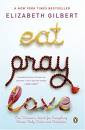
It took like a full year to read through this novel but I finally finished it. I don't really remember the "Eat" part since I read it last February. But I do remember thinking, how awesome would it be to just vacation for four months in Italy, and get paid for it, just cause you are a good writer. That is the dream folks. Now, "Pray" was super annoying. I'm actually really surprised I kept reading the book. I was like, GET OVER YOURSELF! This portion of the book really made me never ever want to take up the practice of yoga or meditation. Yuck.

But then she takes us to Indonesia and I just can't put the book down. Memories of my Malaysia just come swarming back. I understand everything she is talking about. Motorcycles everywhere, with full families of 5 clinging on to each other as they swerve through the streets. There's the old Bali man who isn't sure if he's 65 or 105, cause who really knows when they were born? There's the family she wants to build a house for, so she raises the money and then the woman tries to swindle her out of more money. She struggles with the stereotypes that come with the citizens of third world countries, because she sees the beauty in each and every one of them. But the truth is, some of these traits just come from the basic need to survive in a world where your dollar can crash in minutes and corruption is the norm.

Overall, I guess I'll admit I liked the book. I wouldn't really recommend it to anyone. So don't go out and buy yourself a copy. But if you want to borrow mine I'll let you have it.

Friday, November 28, 2008

The End


I was disappointed, then into it, disappointed, then into it. Even in the last 50 pages I kept changing my mind. But despite what all the reviews say. I'm not bothered by the all too happy happy ending. Sure I think literature has greater value when someone dies or some sacrifice is made. And the movie would be better if they had fought the Volturi (which I'd about bet the movie does anyway). But this wasn't written as great literature, nor with the intent to be an action packed movie. So hats off to Meyers.

I'm excited to see the inner city black kids starting to get into this book. I love when they read anything, let alone 2,400 pages of anything.

I'm definitely not a die hard fan. But I won't be embarrassed to admit I read the series. And I definitely did not fall in love with Edward like so many readers did. Eh . . . is all I have to say about him and Bella. I like Bella and all but Jake and Nessie's love is the type I want. And Alice was probably my favorite character. I just really liked her. She seemed so upbeat and "cool." In this book I really liked the Romanian Vampires. They were funny.

There were a couple of holes in the plot, but even my beloved Friends has its errors. One complaint I will make though, some words were really over used. I noticed that in the second book (my personal favorite) and it didn't stop with the next two. But like I said, overall . . . kudos Meyers.

Tuesday, November 25, 2008

I grew up in a small village.

I don't think I've ever been so excited to finish a book. Not that it was bad, it just felt like I read three or four books because there were so many stories within the story. Some were more compelling than others. The ending was disturbing, even more so than Grapes of Wrath. Which says a lot. Although, I have to give Aureliano and Amanarta Ursula credit, they weren't 100% sure they were related, so they weren't fully aware of how disgusting their affair was. And I have to admit I saw it coming, since incest was Ursula's biggest fear.

I liked the story theme that history is forgotten, almost even erased. I still think the banana rebellion was a bit of a stretch. There's no way a town wouldn't notice the murder of 3,000 people. But I guess the point is that if a government is evil enough they can cover it up. Pretty amazing.

Overall, the book was a bit graphic for me. And I'm not excited to read his next one. But I do see why this was on my list of 50 greatest books. The sentences are flawless, even in translation. The story is compelling, even if it feels a bit rushed. I'd never want to teach this, not even in AP. I just felt like there was so much there that I didn't understand. Thank you sparknotes for helping me get through it.

Now about the title of this post. I do think this book was trying to prove something about the isolation of a small village, and I didn't really get what. Some people left the village and came back so it wasn't all that terribly isolated. Maybe it was trying to prove the crab bucket theory. Like I said, I'm just not sure I understood everything that was going on in this novel.